Light enough to send anywhere
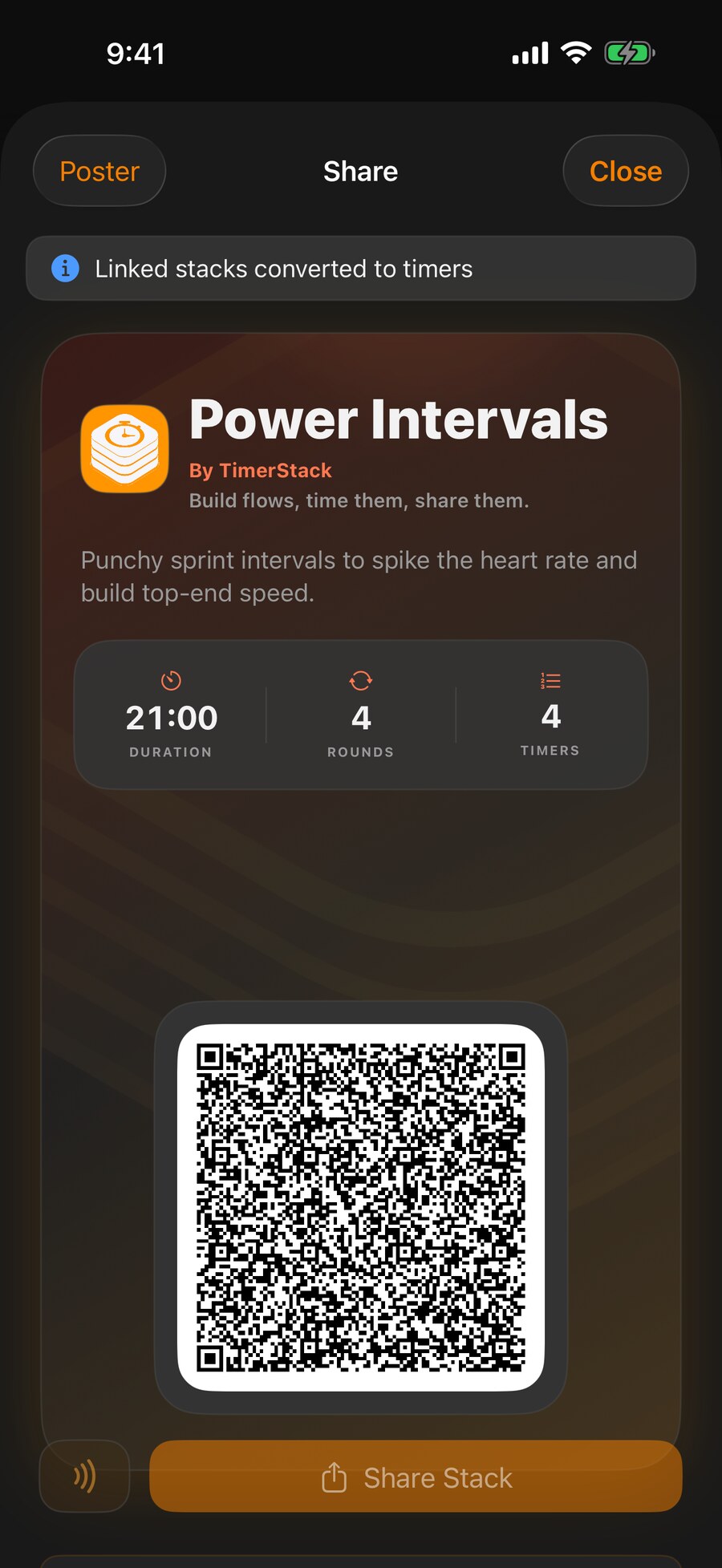
The routine itself is small, so it fits in a QR code on a gym wall or a message thread. Heavier media resolves separately rather than bloating every copy.
Trust
Anyone can send you a file. The question is whether it is the one the creator actually published, unchanged, with their name on it honestly. A published stack answers that before you run a single step, and the app tells you plainly when it cannot.
What Travels
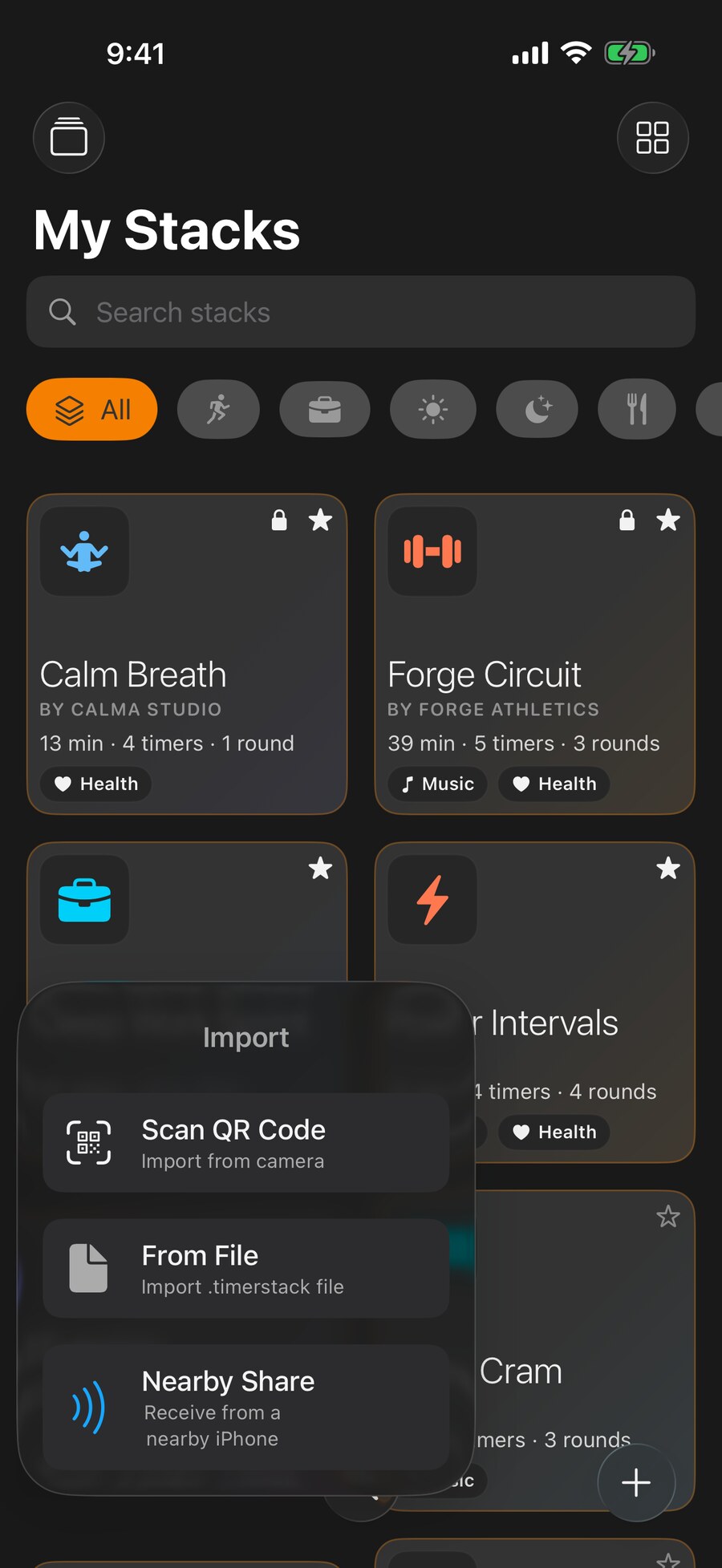
Share a workout today and what arrives is a description: a screenshot, a caption, a video to pause and rewind. The other person still has to reconstruct it, and most never do. A stack travels as the routine itself, so it lands ready to press start.
What Is Actually Checked
The verified badge is not something a creator types into a field. Your phone works it out for itself, in the moment before the routine appears.
If any of that fails, the routine still imports. It simply arrives unverified, and the app says so rather than quietly pretending otherwise. For the curious: the seal is an ECDSA signature on the NIST P-256 curve, and the fingerprints are SHA-256 hashes.
Why It Is Built This Way
Trust has to last the whole handoff. A routine is worth sharing precisely because it travels: link, QR code, file, gallery. Every hop is a chance for something to be altered, and the person receiving it is the least equipped to notice.
The routine itself is small, so it fits in a QR code on a gym wall or a message thread. Heavier media resolves separately rather than bloating every copy.
Publishing under your identity means a routine circulating with your brand on it can be shown to be yours, not an imitation assembled by someone else.
Verified, unverified, or edited: the app shows which, rather than presenting every import as equally trustworthy and hoping for the best.
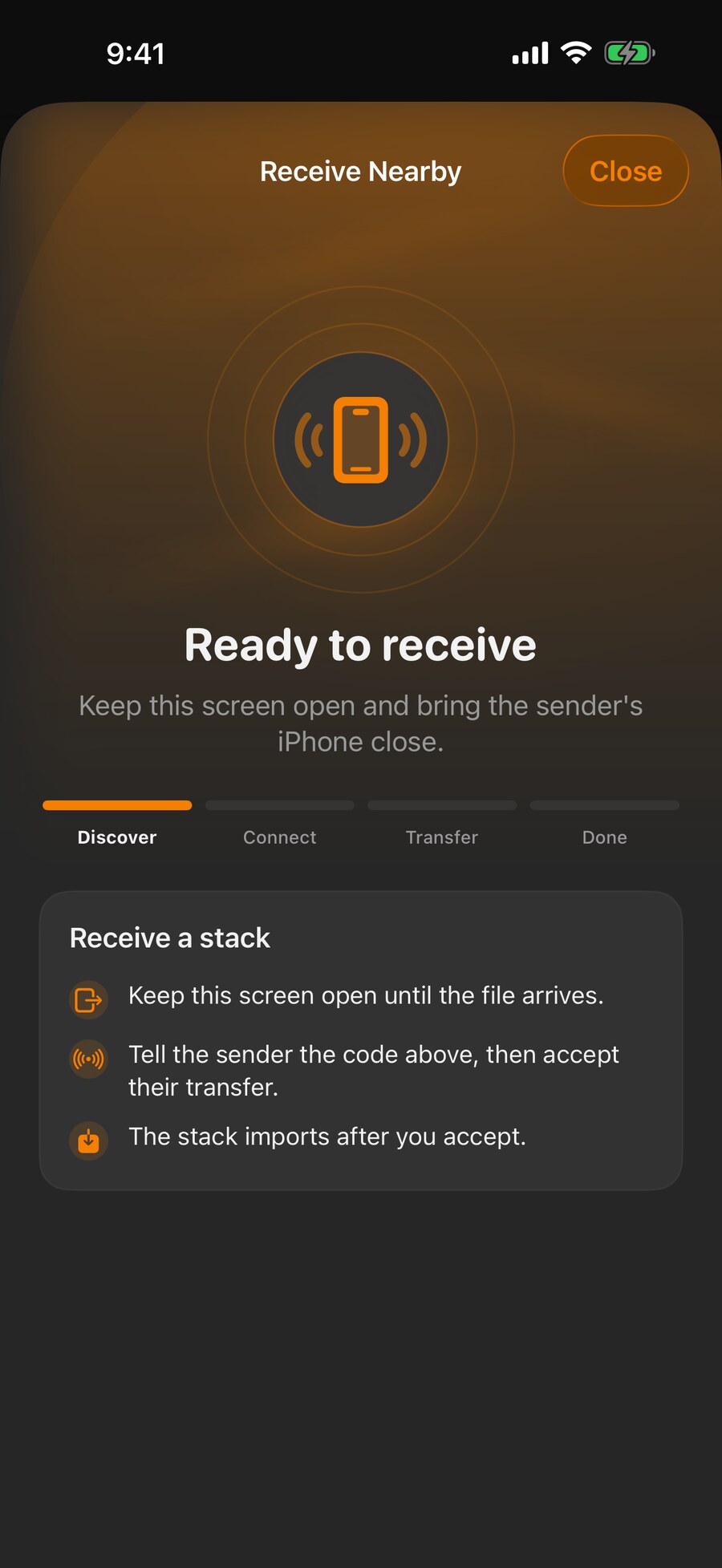
The checks run on your device against the routine you received. One passed between two phones in a room with no internet verifies exactly the same way.
A creator's signing key is held in the Keychain, encrypted end to end and carried across their own devices by iCloud. It used to be bound to one handset, which was safer on paper and wrong in practice: changing phone meant losing the identity your audience recognised.
After You Import
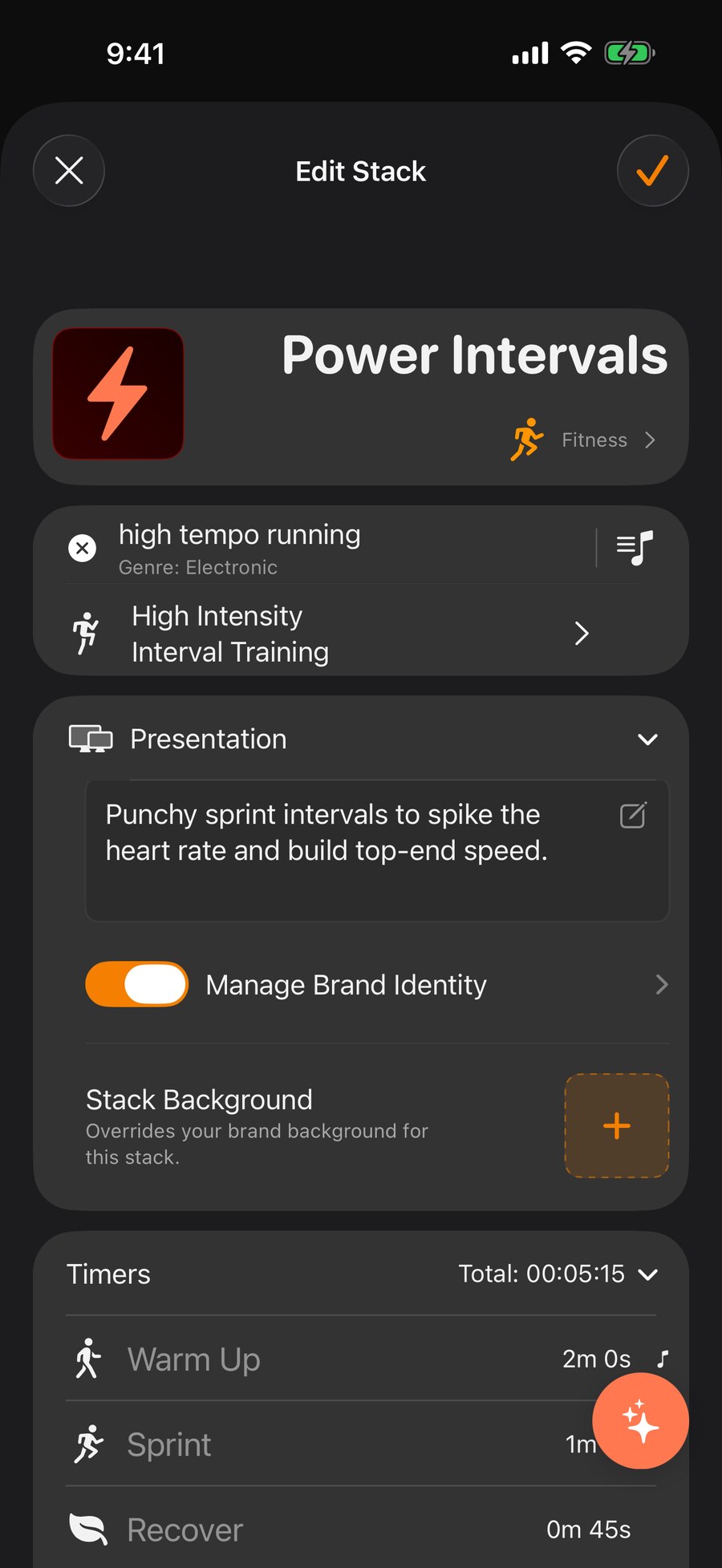
An imported routine is a working copy, not a locked document. Retime the intervals, swap the music, cut the steps you do not need. It does not phone home and it does not expire.
What you cannot do is edit a routine and still present it as the creator's published original. The moment the contents stop matching the signed manifest, the verified state no longer applies, because the thing it vouched for has changed. That is the honest behaviour, and it protects the creator and the next person to receive it equally.
None of this is only for creators. A routine you throw together for a training partner travels exactly the same way a studio's published programme does. The difference is how it is presented, and whether it carries a seal, not how it works.
That is the point. The work happens in the second between tapping a link and seeing the routine, so the only thing you have to decide is whether you want to run it. The gallery is the fastest way to see it happen: pick a routine, import it, run it.